
日本の伝統文化について海外の方から質問されたとき、返答に困ったことはありませんか?
特に茶道の場合は稽古を長く続けてても、あるいは英語が得意であっても上手に説明することは意外と難しいですよね!
今回はそんな方に、英語で簡単に説明できるポイントをご紹介します!
覚えておきたい茶の湯単語
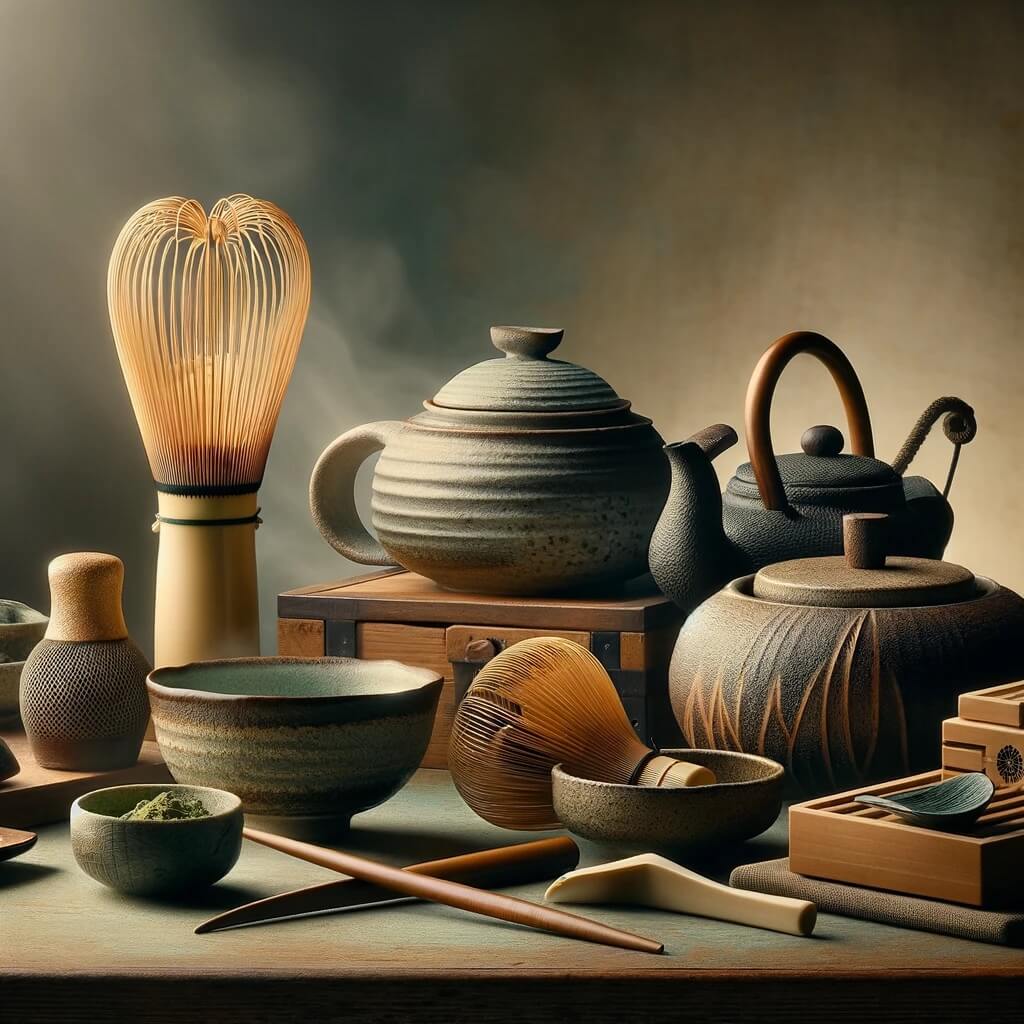
■柄杓:bamboo ladle
A utensil made of bamboo used to scoop and pour water.
■水指:fresh wanter container
A vessel for fresh water, used in the tearoom for the tea-making procedure.
■茶杓:tea scoop
A spoon used to scoop powered green tea from the tea container.
■釜:kettle
A metal pot used for boiling water to make tea.
■茶器:Chaki
英語では「tea utensils, tea container」などがあります。
Chaki can either refer to various tea utensils used during the tea ceremony or to a container for Macha powdered green tea.
■茶箱:Chabako
英語では、「a box containing a set of tea utensils」などと呼ばれます。
Chabako utensil box is used when a chabako tea utensil containerchabako utensil boxtea ceremony takes place somewhere other than the teacher’s own place.
■濃茶:thick tea
A dense blend of powdered green tea and hot water.
■薄茶:thin tea
A relatively thin blend of powered green tea and hot water.
■懐紙:packet of paper
A packet of rice paper put inside the bosom overlap of one’s kimono.
■帛紗:silk cloth
A silk cloth which is the symbol of the host, and is used to purity utensils.
■茶筅:tea whisk
A bamboo whisk used to mix powered green tea and hot water.
お茶会で利用できる基本例文
あまりネイティブな文章ではないかも知れませんが、使える表現として以下の文章をご紹介します。
[table type=”standard_minimal”]
[trow]
[thcol]日本語[/thcol]
[thcol]英語訳[/thcol]
[/trow]
[trow]
[tcol]お菓子をどうぞ [/tcol]
[tcol]Please enjoy the sweets.[/tcol]
[/trow]
[trow]
[tcol]お薄を一服う差し上げます[/tcol]
[tcol]I would like to make thin tea for you.[/tcol]
[/trow]
[trow]
[tcol]もう一服いかがですか?[/tcol]
[tcol]Would you like to have another bowl of tea.[/tcol]
[/trow]
[trow]
[tcol]充分いただきました[/tcol]
[tcol]I had enough. Thank you.[/tcol]
[/trow]
[trow]
[tcol]先日はお招き頂きありがとうございます [/tcol]
[tcol]Thank you very much for inviting me last week.[/tcol]
[/trow]
[trow]
[tcol]とても楽しませていただきました。[/tcol]
[tcol]I have enjoyed from the bottom of my heart.[/tcol]
[/trow]
[trow]
[tcol]お茶を頂戴します[/tcol]
[tcol]Thank you for the tea.[/tcol]
[/trow]
[trow]
[tcol]本当に素晴らしいですね![/tcol]
[tcol]This is fabulous![/tcol]
[/trow]
[/table]
お茶会って何するの?ー露地・待合ー
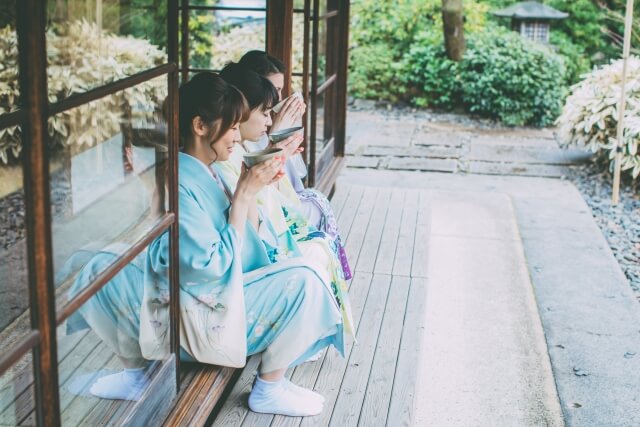
Chakai, or a casual tea gathering, is a shared experience of all five senses for both the host and the guest.
茶会は亭主と客が共有する五感の体験です。
茶道の英語訳としてtea ceremonyは必ずしも的確な言葉ではないと思われます。なぜなら「セレモニー」は宗教的な儀式という意味合いが強く、茶道の一義的なイメージしか伝わらないためです。茶道には人生をより良く生きるためのヒント(=Art of living)がたくさん含まれてます。ですので、日本語のまま「chanoyu」「chado」が良いでしょう。
[table type=”standard_minimal”]
[trow]
[thcol]知っておきたいフレーズ[/thcol]
[thcol][/thcol]
[/trow]
[trow]
[tcol]茶の湯には500年の歴史があります[/tcol]
[tcol]Chanoyu has five hundred years of history.[/tcol]
[/trow]
[trow]
[tcol]茶会では客は亭主が準備する抹茶を楽しみます[/tcol]
[tcol]At chakai, the guest can enjoy a bowl of tea prepared by the host.[/tcol]
[/trow]
[trow]
[tcol]茶室へ向かう庭を露地といいます。歩みを進めるほどに心が清らかになるとされています[/tcol]
[tcol]The garden path leading to the tearoom is called roji. It is designed to purity mind as you pass through.[/tcol]
[/trow]
[/table]
和風の庭には欠かせない!ーつくばいー
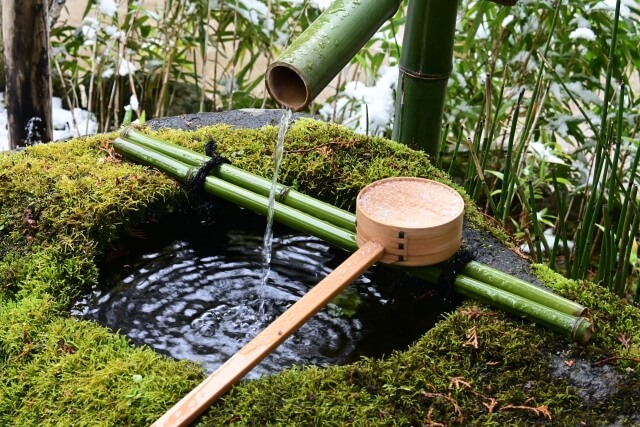
Since the tearoom is regarded as a sacred place, we symbolically purity our mind and body before entering.
茶室は聖なる空間とされてますので、入室前に心身を象徴的に清めます。
茶会ではどの場面もさまざまなメッセージが込められています。茶室等空間に向かうために露地を進み、つくばいの水で心身を清めることもその一例です。茶道は体験型の伝統文化ですから、せっかくなので多少難しそうでも見よう見まねでやってみたいという方をおもてなすために、ぜひつくばいの説明をしてみましょう!
[table type=”standard_minimal”]
[trow]
[thcol]知っておきたいフレーズ[/thcol]
[thcol][/thcol]
[/trow]
[trow]
[tcol]日本では古くからお清めに水を用いてきました。[/tcol]
[tcol]Water has been used for purification in Japan from the ancient era.[/tcol]
[/trow]
[trow]
[tcol]柄杓を右手でとり、水をすくって左手ですすいでください。同じ方法で右手もすすいでください。[/tcol]
[tcol]Take the ladle with your right han, scoop water and rinse your left hand. Then rinse your right hand in the same way.[/tcol]
[/trow]
[trow]
[tcol]もう一度水をすくいます。水を左手に受けて、口をゆすいでください。[/tcol]
[tcol]Scoop water one more time. Pour some water into your left palm an rinse your mouth with it.[/tcol]
[/trow]
[trow]
[tcol]次の客のために柄杓を垂直に立てて、残りの水で柄を清めてください。[/tcol]
[tcol]Hold the ladle vertically and let the remaining water run down to purify the handle for the next guest.[/tcol]
[/trow]
[/table]
茶道とは?英語スピーチに挑戦してみよう!
Chanoyu (茶の湯), also known as the Japanese tea ceremony, is a traditional Japanese cultural activity involving the ceremonial preparation and presentation of matcha (抹茶), powdered green tea. The term literally means “hot water for tea.” The practice, which is a blend of philosophy, spirituality, and hospitality, embodies a harmonious and refined aesthetic.
The tea ceremony is deeply influenced by Zen Buddhism and is centered around the principles of harmony (和), respect (敬), purity (清), and tranquility (寂). It’s not just about drinking tea, but also about aesthetics, such as the choice and arrangement of utensils, the movements of the host, and the interaction between the host and guests. It is a mindful practice that emphasizes simplicity, directness, and stillness of mind.
ざっくりではありますが、茶道を簡潔にまず概要を伝える紹介文です。
Sadou(茶道) is a Japanese traditional etiquette of preparing and drinking tea, and initially called “chayu” and was originally developed from China. Although the main purpose is to enjoy tea, however, the manner, performance, tea equipment, tea room, and the decoration of the tea room are also important and performed as part of the composite arts.
茶道は村田珠光が開始したとされるものですね。この辺りを時代背景と絡めて以下のように簡単に説明できます。
Murata Shukou is the Founder of Chanoyu.
The history of sadou is from Kamakura Period (1185 ~ 1333) and brought to Japan by a Buddhist monk from China. Initially tea was treated as “medicine”, and believed that drink too much is not good for health. The understanding for tea is matcha only. From Edo Period (1603 ~ 1867), not only matcha was available, sencha also commonly used and was known in Japanese as senchado (the way of sencha). However, sadou is mainly making tea of matcha.
いかがでしたか?みなさも英語の勉強がてらに、ぜひ実践して見てくださいね!